

Parasite Sprays for Cats: Plant-Based Protection Against Fleas, Ticks and Mites
Cats are exposed to various pests in everyday life. Fleas, ticks and mites are among the most common nuisances for indoor cats and outdoor cats alike. Our plant-based sprays for cats can help protect your pet without applying synthetic insecticides to the coat. Suitable for all cat breeds, including kittens.

Product overview
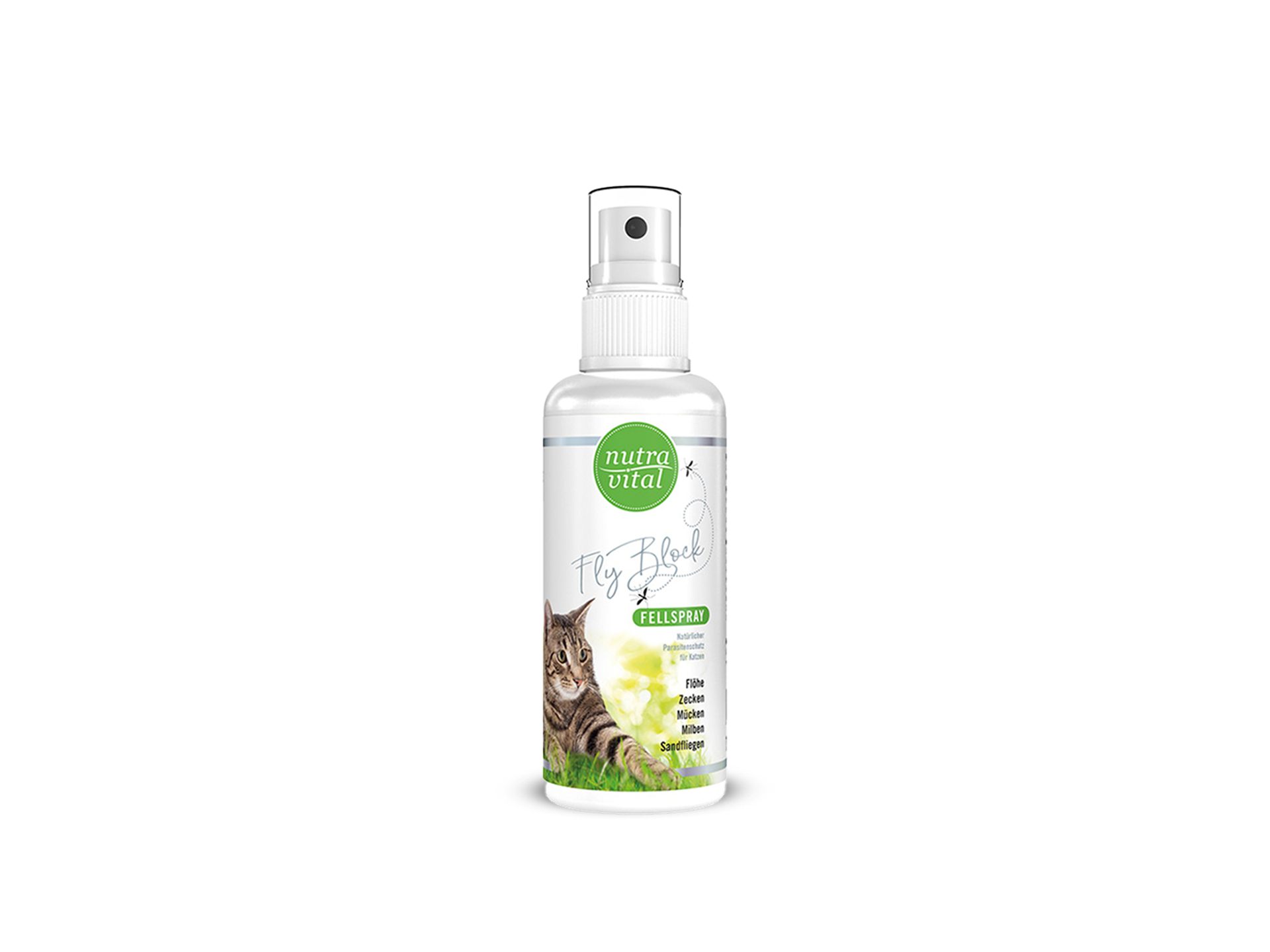
NutraVital® Fly Block for Cats
Plant-based tick and flea protection, specially developed for cats.
(€199.90 / 1 kg) •
Available immediately (delivery time: 2-5 days)
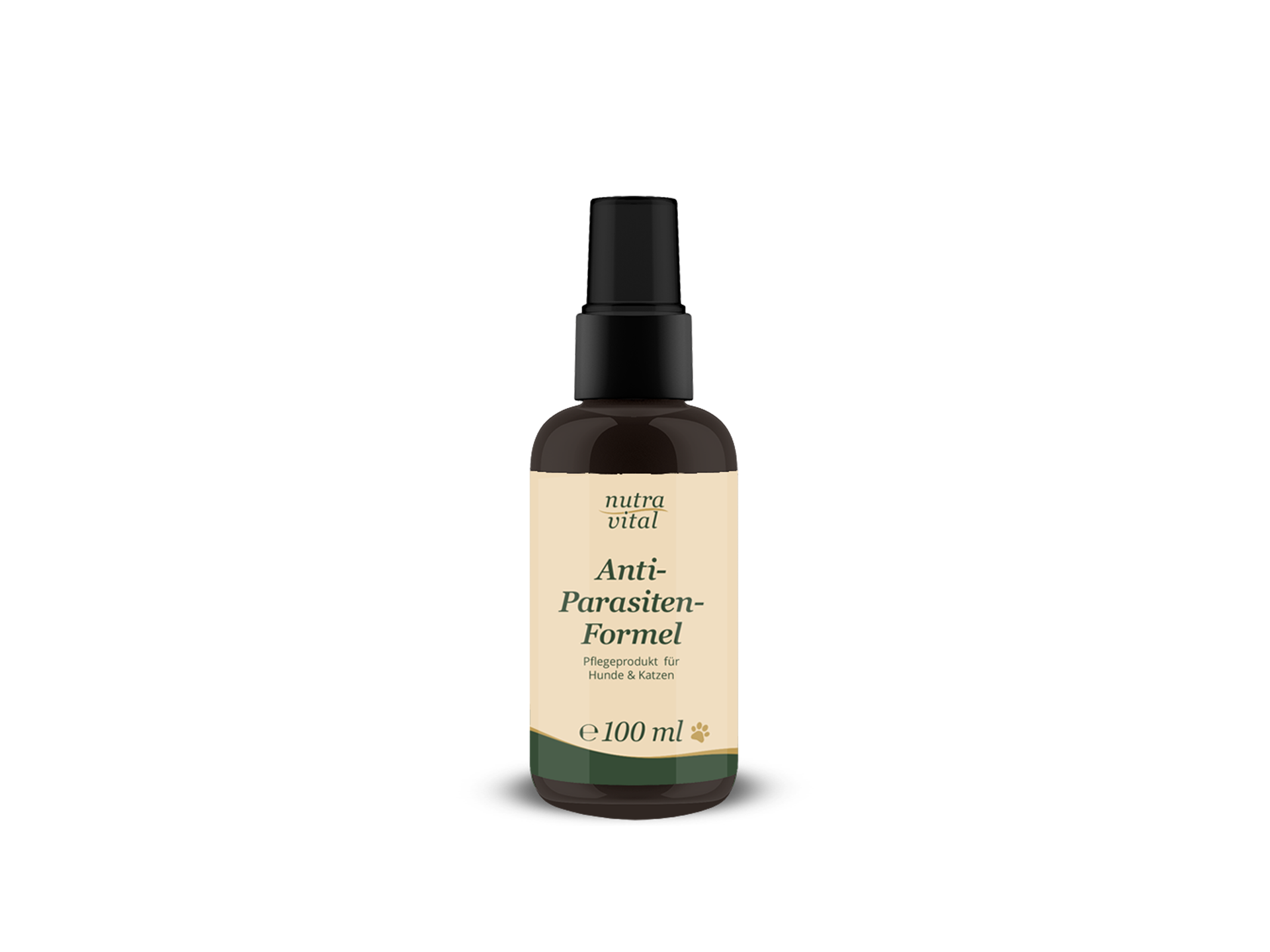
NutraVital® Anti-Parasite Formula
Natural anti-parasite formula, gentle on your pet yet powerful in effect.
(€119.90 / 1 kg) •
Available immediately (delivery time: 2-5 days)
Plant-Based Anti-Parasite Sprays for Cats
Our range includes plant-based sprays for cats that can repel fleas, ticks and mites without relying on synthetic insecticides. Each product is based on a combination of plant-based active ingredients including manuka oil, andiroba oil, catambra extract, geraniol and thiamine (vitamin B1). The spray is applied directly to the coat, every two to three days during the active season.
A plant-based alternative made from purely natural ingredients, formulated with skin compatibility in mind. Our products for cats can also be used as an environment spray for bedding, transport crates and carpets. Developed by the manufacturer in Germany. Whether used as a flea spray, tick spray or mite spray for cats, one product covers multiple pests in a single step. Instead of keeping three different sprays in the cupboard, one is enough. A good flea spray for cats should also cover the animal's surroundings.
Note for multi-pet households with dogs and cats: Our NutraVital® Nature Anti-Parasite Formula is suitable for both dogs and cats. One spray for all pets in the household, ideal for owners with a mix of dogs and cats.
Manuka oil, andiroba oil, catambra extract, geraniol and other natural active ingredients. Free from synthetic insecticides.
Effective against fleas, ticks, mites and other ectoparasites in cats. One solution for multiple types of pest.
Can be applied directly to the cat's coat as well as to bedding, transport crates and carpets. Practical for flea infestations in the home.
Plant-based, formulated with skin compatibility in mind. Suitable for all cat breeds, including kittens.
Types of pest
Which Parasites Affect Cats
Cats come into contact with various pests depending on their lifestyle. Outdoor cats pick up ticks from grass and bushes, while indoor cats can get fleas via other animals or even on their owner's shoes. Mites occur in both types. A good spray covers multiple types of ectoparasite, removing the need to switch between a flea spray, a tick spray and a mite spray. The following overview summarises which pests are most common in cats.
Fleas in Cats
Flea infestations are one of the most common problems in cats. A single flea can lay up to 50 eggs per day, which fall into the animal's surroundings: bedding, carpets and upholstered furniture. If there is a flea infestation in the home, treating just the cat is not enough ... the environment needs to be treated as well. A flea spray for cats that also works as an environment spray covers both areas in one step.
Plant-based sprays containing geraniol and essential oils can help keep fleas at bay and can be applied directly. In the case of an active infestation, the cat should be treated consistently, every two to three days in the first few days. Regular use of a flea spray reduces the risk of fleas becoming established in the home.
Ticks in Cats
Ticks are mainly a concern for outdoor cats. They sit in grass, bushes and along woodland edges, waiting for a host. A tick spray for cats can help ensure that ticks no longer recognise your cat as a suitable host. Plant-based tick sprays use the repellent effect of essential oils. As a preventive tick treatment, regular application every two to three days is recommended during the active season from spring to autumn. Consistent tick protection forms the foundation of any pest defence for cats.
Mites in Cats
Mites in cats are often detected late because the symptoms are initially subtle. Harvest mites are particularly common in late summer and autumn, targeting thin-skinned areas on the paws, belly and ears. A mite spray for cats, applied before going outdoors, can reduce contact with mite larvae and help prevent an infestation.
Ear mites settle in the ear canal and cause itching and head shaking ... if the problem is more severe, it is best to have this checked by a vet. With harvest mites, the most commonly affected areas are the ears, paws and belly, so pay particular attention to these spots when applying the spray.
Other Pests: Mosquitoes, Sand Flies, Biting Lice
In addition to the three most common pests, cats can also be affected by mosquitoes, sand flies and biting lice. Sand flies are particularly prevalent in the Mediterranean, which makes them relevant when travelling with your cat. Biting lice occasionally occur in cats that have frequent contact with other cats. A spray with a broad spectrum of action covers these pests as well.
Plant-based vs chemical
Plant-Based Spray or Chemical Solution?
When it comes to pest protection, cat owners can choose between chemical and plant-based products. Both approaches have their place, but they differ fundamentally in how they work.
How Plant-Based Sprays Work
Plant-based sprays for cats can alter the animal's natural scent. As a result, fleas, ticks and other pests may no longer recognise the cat as a suitable host and avoid it. Active ingredients such as manuka oil, andiroba oil, geraniol, eugenol and linalool combine their repellent effects. Additional essential oils in the formula provide further support. Thiamine (vitamin B1) strengthens the defence. The mechanism is based on repelling rather than killing.
What Sets Plant-Based Sprays Apart
Chemical spot-on treatments are based on synthetic insecticides. Plant-based sprays do without these active ingredients. Cats with sensitive skin, kittens, and owners looking for a gentler solution for their pet benefit from the milder approach. However, a plant-based spray needs to be reapplied more frequently: every two to three days during the season.
Application
How to Apply the Spray to Your Cat Correctly
The effectiveness of a plant-based spray depends on consistent application. Using the spray only sporadically leaves gaps in your cat's protection.
Applying to the Coat
Spray from a distance of about 20 cm onto the cat's coat, including against the direction of the fur. The belly, legs and neck area should all be treated, as fleas and mites tend to bite in these spots. Avoid the eyes and mouth area. Keep enough distance from the animal's eyes when spraying to prevent irritation.
The treated areas should cover all exposed parts of the body, including the ears and surrounding fur. If there are signs of itching or skin reactions, pause the application and consult a vet.
For cats that do not like being sprayed directly (which is the case with many cats), indirect application works well: spray a few pumps onto your hand or a cloth and rub it into the coat against the direction of the fur. This way you can also reach sensitive areas such as the face, around the eyes and the ears.
The spray head on the pump bottle allows for controlled application: a few sprays are usually enough per treatment. Wipe the spray head briefly after each use to prevent clogging. If a tick has already attached itself, removal with a tick remover is recommended.
Treating the Environment
Transport crates, carpets, cat blankets and resting spots can become home to fleas, flea eggs and mites. A spray that also works as an environment spray treats both your cat and your living space at the same time. In the case of a flea infestation in the home, treating the environment is important because flea eggs and larvae can survive in textiles.
Reapplying Regularly
Spring and summer (active season): apply every two to three days. Year-round protection: reapply every seven to fourteen days. After contact with water, the application should be renewed, as water washes plant-based active ingredients off the coat. Protect from direct sunlight.
FAQ – Frequently asked questions
NutraVital Fly Block – Zeckenschutz mit rein pflanzlichen Inhaltsstoffen
NutraVital Fly Block ist ein Zeckenschutz mit rein pflanzlichen Inhaltsstoffen. Frei von chemischen Zusätzen, schützt, pflegt und reinigt auf natürliche Weise, und zwar sicher, schonend und hautverträglich. Keine allergischen Reaktionen oder andere Nebenwirkungen. Sie schaffen durch die regelmäßige Anwendung außerdem eine bessere Hygiene auch in der Hundehütte, auf Teppichen, an Schlafplätzen, in Tiertransportboxen und in Stallungen.
Wie wirkt die Abwehr durch NutraVital Fly Block
Je früher Zecken, Flöhe, Milben und Mücken aus dem Fell kommen, desto weniger Schaden richten sie an. Mit NutraVital Fly Block gelangen Parasiten erst gar nicht ins Fell, weil das Fell und die Haut nachhaltig für Zecken und andere Parasiten unattraktiv werden.
Vorteile Probiotischer Pflegesprays NutraVital Care
- 100 % natürliche Inhaltsstoffe
- von renommierten Experten entwickelt
- besonders hautverträglich für empfindliche Tiere
- für alle Tierarten und Rassen geeignet